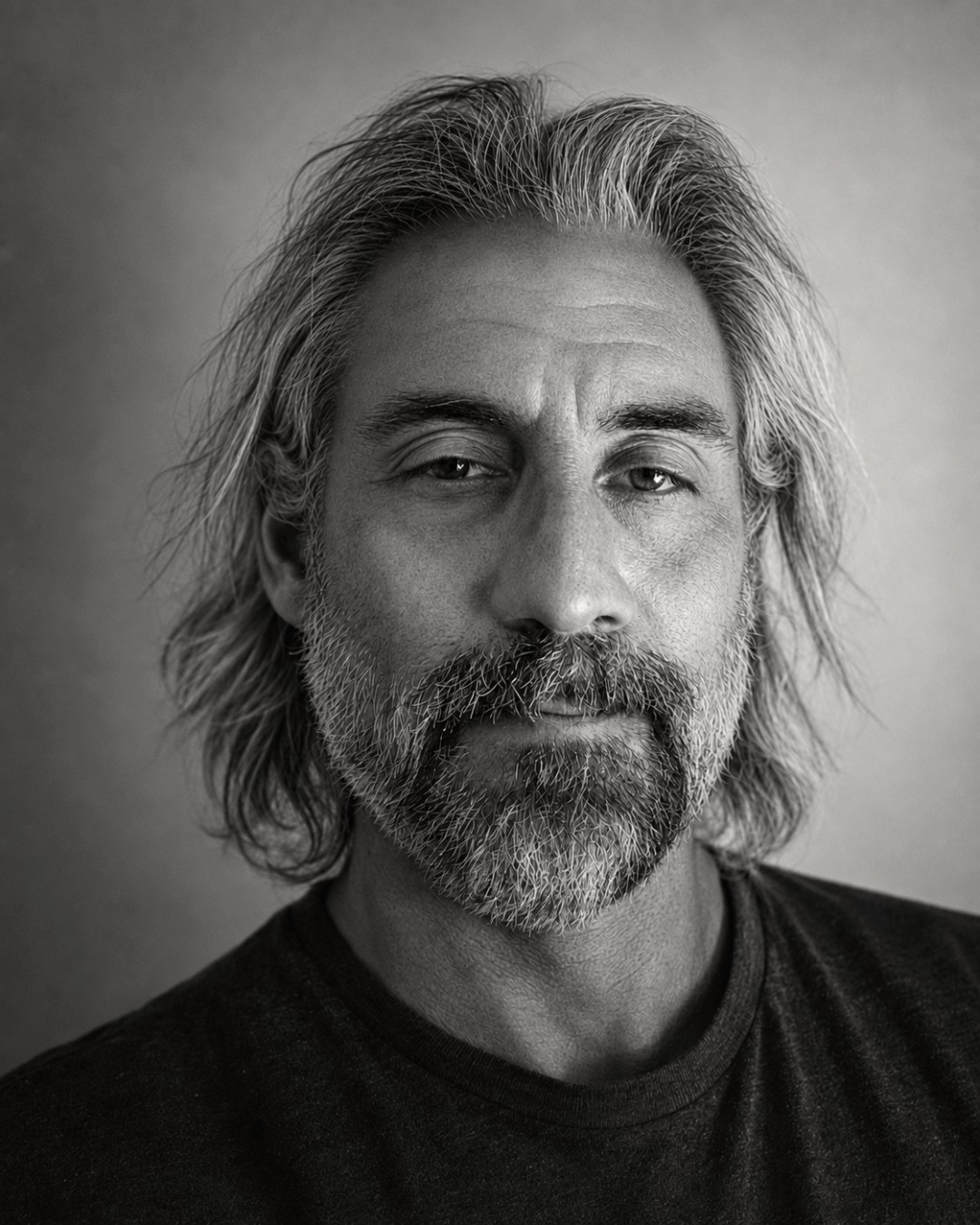
Christian Jacobsen

Participation is the human operating system.

Co-founder of The Many. Strategist. Second-degree black belt.

Author of Wired to Participate. October 2026.

Christian Jacobsen

Most of what I’ve learned came from questioning something everyone else had agreed to stop questioning.

I lead an independent creative company from its board and I write about how people take part in things. Those turn out to be the same job.

30years in the work
17years building one company
Ad Age Small Agency of the Year, at The Many
2books, 2026 and 2027
22years on the mat

The agency awards belong to The Many. I co-founded it and I’ve led it for seventeen years, now from the board.

What I keep coming back to

Most of my industry still treats a person as an audience. Someone to reach and convince. That model was built for a world where attention only moved in one direction, and it has been quietly failing for twenty years.

People want in. They want a role in the thing they care about and a stake in how it turns out. Give them that and it starts moving on its own, and it stops needing to be pushed.

I’ve spent thirty years watching this happen inside companies and out in culture. The pattern held up often enough that I stopped treating it as a tactic and started treating it as the thing underneath. Participation is how we’re built, and most of what gets designed for us ignores it.

The book is where it’s fully worked out

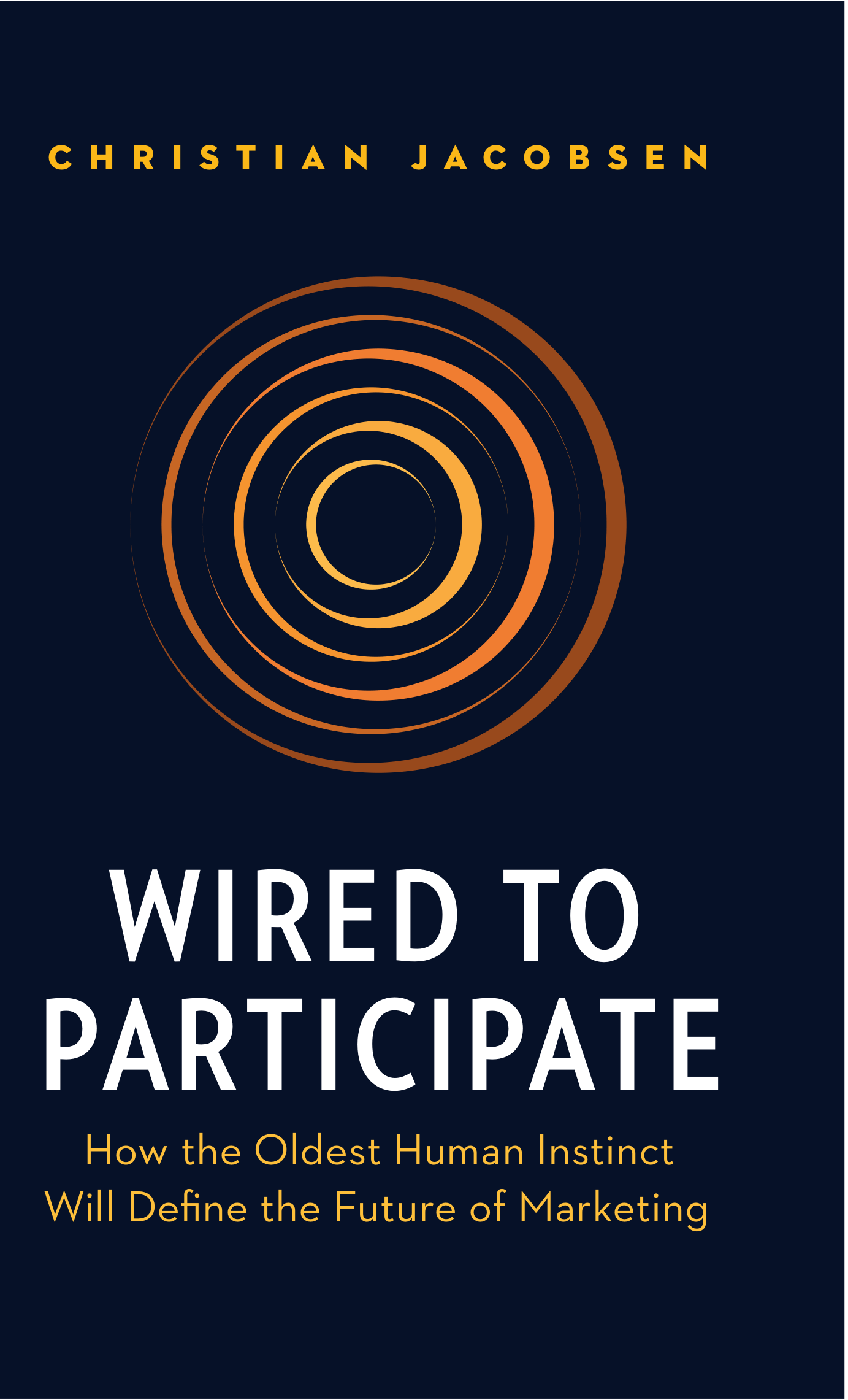
Cover of Wired to Participate

Coming October 2026 from Page Two

Wired to Participate

We didn’t evolve to be persuaded. We evolved to take part. I’ve been circling that idea my entire career and this is the first time it’s written down in one place.

A second book, The Loose Grip, follows it in 2027.

participationatlas.com

The Participation Atlas

A living record of how the world co-creates. It maps every case I can find where people were given something to do instead of something to watch, from participatory marketing to open governance to neighborhood assemblies, and it scores each one on how deep the participation actually goes.

It is built by the people who study this and practice it, which means the Atlas runs on the same principle it documents. The book sets out the thinking. This is where it gets pressure-tested against real cases, and it keeps growing long after the book is done.

Explore the Atlas

01Observe
02React
03Contribute
04Co-Create
05Tribe

The five depths of participation the Atlas measures against.

Shaped by Experience

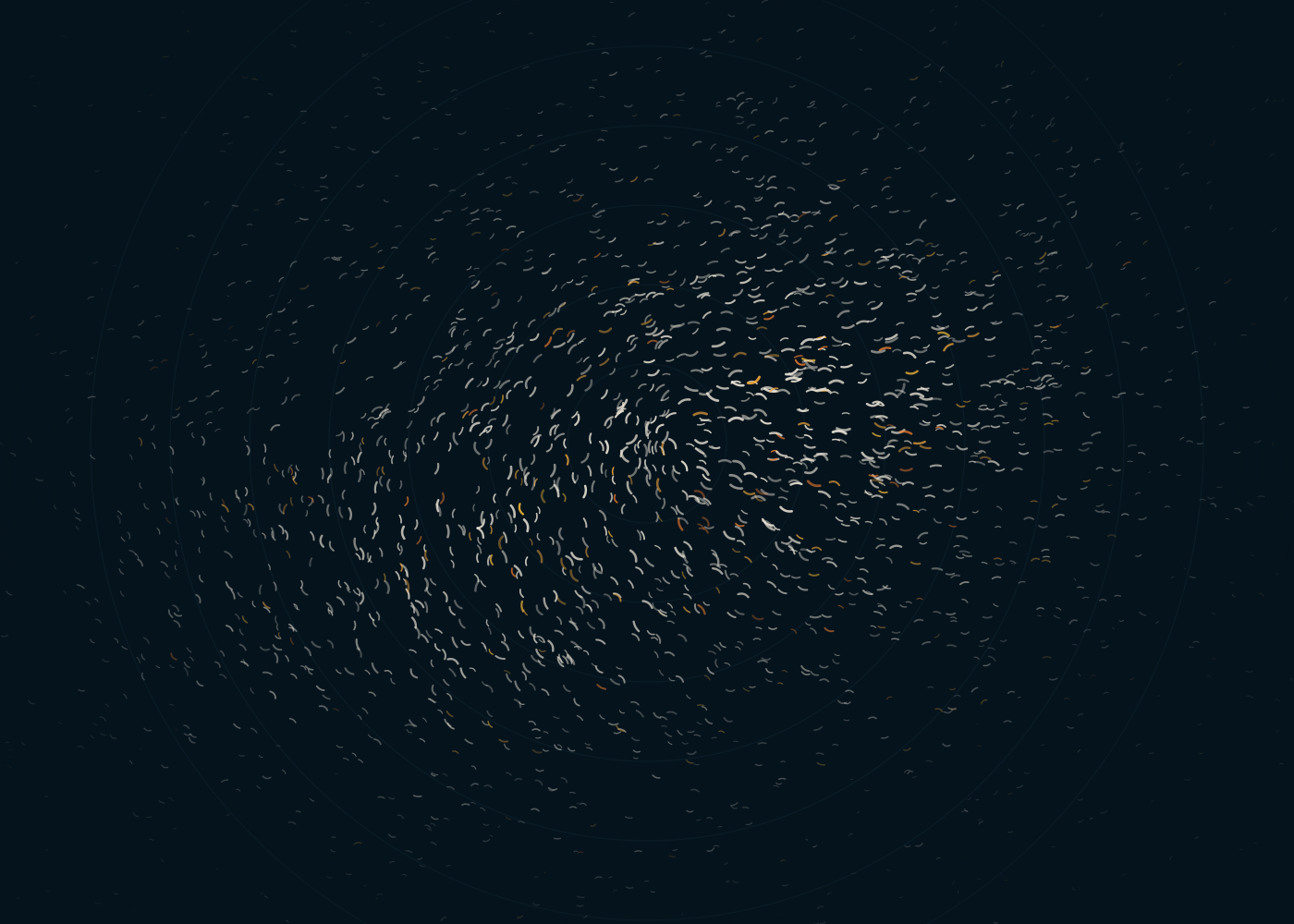
A murmuration. Individual birds following local rules, producing one coherent shape.

Creative Problem Solver

Invention

Thirty years in creative advertising and new media. Madison Avenue to owning the agency.

It’s a category that doesn’t let you coast. You have to make something up on a deadline, and to do that you need to know what people are actually moving toward and where the media went last week. I do my best work in a room with other creative people. Somebody puts a rough idea on the table and it leaves as something nobody walked in with.

What it taught meCreativity is a weapon.
The rest of it didn’t come from a desk. It came from places where I had something at stake.

A working room before anyone arrives

Entrepreneur

Risk

Seventeen years and two recessions.

I co-founded The Many and I’ve spent seventeen years building it. Somewhere in there risk stopped being something I evaluated from a distance and became the water I swim in. The challenge you avoid is almost always the one that had the most to teach you.

What it taught meYou can’t outsource conviction.

Mat surface in a jiu-jitsu gym

Second-Degree Black Belt

Leverage

Twenty-two years on the mat.

Jiu-jitsu is the study of how a smaller person beats a bigger one. Position over strength, and a willingness to give up ground to get a better angle. Two decades in, I read the whole thing as strategy. Your weakness is always wherever you stopped paying attention.

What it taught meSize loses to position.

The ocean surface at first light

Surfer

Adaptation

Most mornings, before the day starts asking.

The ocean doesn’t negotiate. I paddle out most mornings and the conditions decide what kind of session it is. You’re working with a force much larger than you are, and the only way through is to find harmony with it. Most of what shapes a day sits outside anyone’s control. How you meet it doesn’t.

What it taught meFlow is a response, not a mood.

An empty field seen from the sideline

Sports Parent

Leadership

Two kids who compete. Most weekends on a sideline.

I’m not only watching them. I’m studying how the coaches work and how a team holds together when it’s losing. These kids take feedback and adjust faster than most adults I’ve worked with. I’ve also watched the more talented side lose anyway.

What it taught meOne bad attitude beats a better roster.

Each one is a place where an idea had to survive contact with something real before I’d write it down.

More about me

Advisory and boards

Where I’m useful from the outside

I advise founders and leadership teams on where the thing should actually go and what its opportunity really is. Positioning that stopped fitting. An organization that got big enough to start arguing with itself.

I’m making room for board and advisory work. Thirty years of this, seventeen of them inside a company I co-founded and now lead from the board while we take it global. If you’re weighing a seat, a direct conversation is the fastest way to find out whether I’d be useful.

Open to

  • Board seats
  • Advisory roles
  • Leadership team counsel
  • Positioning and new media